
Every documentary is made three times. Once when it is planned, once when it is shot, and once more, for real, in the edit suite. That last version is the one the audience sees, and it is shaped by decisions nobody notices: where a sentence is cut off, how long a face stays on screen after the speaker stops talking, which song plays under which argument.
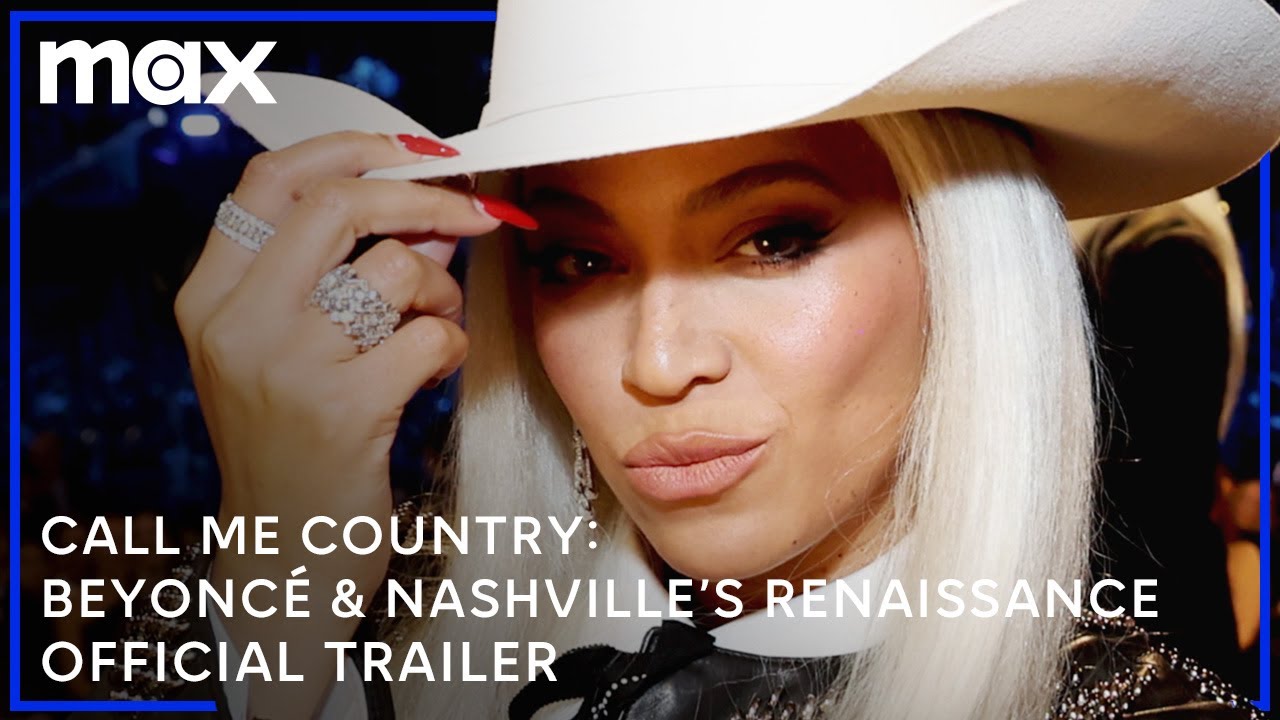
I have worked on both sides of that room: in front of the camera as an actor, and behind it as a producer shaping the interviews we cut here at IOM. So when I look at Call Me Country: Beyoncé & Nashville’s Renaissance, the CNN FlashDocs film that premiered on Max (the service is now called HBO Max again) on April 26, 2024, I start where an editor starts. Not with the headline, but with the raw material.
The Moment It Was Cut For
The film arrived in a very specific window. In February 2024, Beyoncé’s “Texas Hold ’Em” debuted at No. 1 on Billboard’s Hot Country Songs chart, making her the first Black woman to top it. Her album Cowboy Carter followed on March 29, 2024. Less than a month later, the documentary was streaming.
That is a fast turnaround, and speed is the whole idea of the unit that made it. Warner Bros. Discovery describes the film as an examination of a reckoning inside country music, told from Nashville, at a moment when the question of what counts as country had spilled far beyond the industry. According to the company’s announcement, the film looks at how high-profile artists such as Lil Nas X and Beyoncé are challenging the genre’s status quo, and how Black artists in Nashville had been laying the groundwork for that change long before either of them arrived.
For an editor, a deadline like that changes everything. There is no time to wait for perfect archive clearances or a second round of interviews. You build with what you have, and the structure has to be clear from the first assembly.
Reading the Roster Like a Timeline
The press materials list who appears on screen, and to an editor that list is a map of the film’s two voices.
The first track is the musicians: Rhiannon Giddens, who played banjo on “Texas Hold ’Em”; John and T.J. Osborne of Brothers Osborne; Rissi Palmer; Aaron Vance; and Denitia. The second track is analysis, from culture and country music voices including Touré, Larisha Paul, Chris Molanphy, Kyle Coroneos, Keith Hill, and Holly G. and Tanner D., co-directors of the Black Opry.
That split is the oldest tool in documentary editing. Artists give you lived experience: the room they were not invited into, the radio station that would not play the record. Analysts give you context: the chart rules, the history, the numbers. Cut only artists and the film feels like a grievance. Cut only analysts and it becomes a lecture. The craft is in the handoff, letting a musician raise a question that an expert answers two shots later, then handing the last word back to the person who lived it.
The banjo is the detail I would build around. Giddens is both a performer on the song at the center of the story and a musician known for her work on the instrument’s African American roots. One person, two tracks. Editors look for exactly that kind of bridge, because it lets the film move from feeling to fact without a hard cut.
History Is the B-Roll
A film about who belongs in country music lives or dies on its sense of history, and the record gives an editor plenty to work with.
According to Billboard, as reported by CBS News, the previous high for a Black woman on the country chart belonged to Linda Martell, whose “Color Him Father” peaked at No. 22 more than fifty years earlier. In 2019, Lil Nas X’s “Old Town Road” was removed from Billboard’s Hot Country Songs chart after it had topped it, a decision that reignited the same argument.
In the edit, facts like these do two jobs. They carry information, and they set rhythm. A date on screen, a chart position, a single archival frame: each one is a beat that lets the audience breathe between interviews. The danger with a fast-turn documentary is that history becomes decoration, a montage that plays under the talking heads. The better choice is to let one fact land in silence, with no music under it, and trust the audience to feel its weight.
What the Music Asks of the Cut
Music documentaries have a problem other films do not: the subject is sound, and sound is expensive. Licensing a superstar’s catalog on a news timeline is never guaranteed, so editors often build around performance by the interviewees themselves, room tone, and the voices of the people on camera.
That constraint can be a gift. When the music you are allowed to use is played by the artists who were kept at the edges of the genre, the soundtrack itself makes the film’s argument. An editor’s job then is restraint: no stock music doing emotional work the interview has not earned, no swelling score telling the viewer what to feel.
Watching It Now
What a documentary cannot do is edit the future. Call Me Country was finished before the story it was tracking reached its biggest moment. At the 2025 Grammys, Cowboy Carter won Best Country Album, the first time a Black woman had won the category, and then took Album of the Year.
That gives the film an unusual second life. Watched today, it plays less like breaking news and more like a field recording from the middle of a turning point, cut before anyone knew how the scene would end. That is the strongest argument for keeping a film honest and unhurried even on a deadline: the best cut is the one that still holds up once the ending is known.
For anyone who makes films, or simply watches them closely, it is worth seeing with one question in mind. Not only what the film says about country music, but how the edit decides who gets to say it.
Credits. Call Me Country: Beyoncé & Nashville’s Renaissance is produced by the CNN FlashDocs unit. According to Warner Bros. Discovery, Eric Johnson serves as executive producer, Emily Taguchi as supervising producer and Ashley Santoro as senior producer; the unit is led by Katie Hinman, vice president of program development for CNN Worldwide.
Sources: Warner Bros. Discovery press release; Billboard chart reporting via TODAY, CBS News and The Irish Times; Recording Academy (2025 GRAMMYs). Featured image: still from the official trailer, Max / CNN FlashDocs.